California Native Grasses That Perform Well in Sonoma County
If you are designing a landscape in Sonoma County and want something that looks intentional, moves beautifully in the wind, supports habitat, and handles our dry summers without constant irrigation, California native grasses are one of the best tools available.
At Sonoma Outdoor Escapes, we regularly incorporate native grasses into planting plans throughout Healdsburg, Sebastopol, Occidental, and the surrounding areas because they bring structure, texture, and resilience to high end outdoor spaces. Below are eight grasses that perform especially well in our Mediterranean climate along with guidance on pruning, placement for fire wise design, drought resistance, water needs, and how to use them in a layered planting scheme.
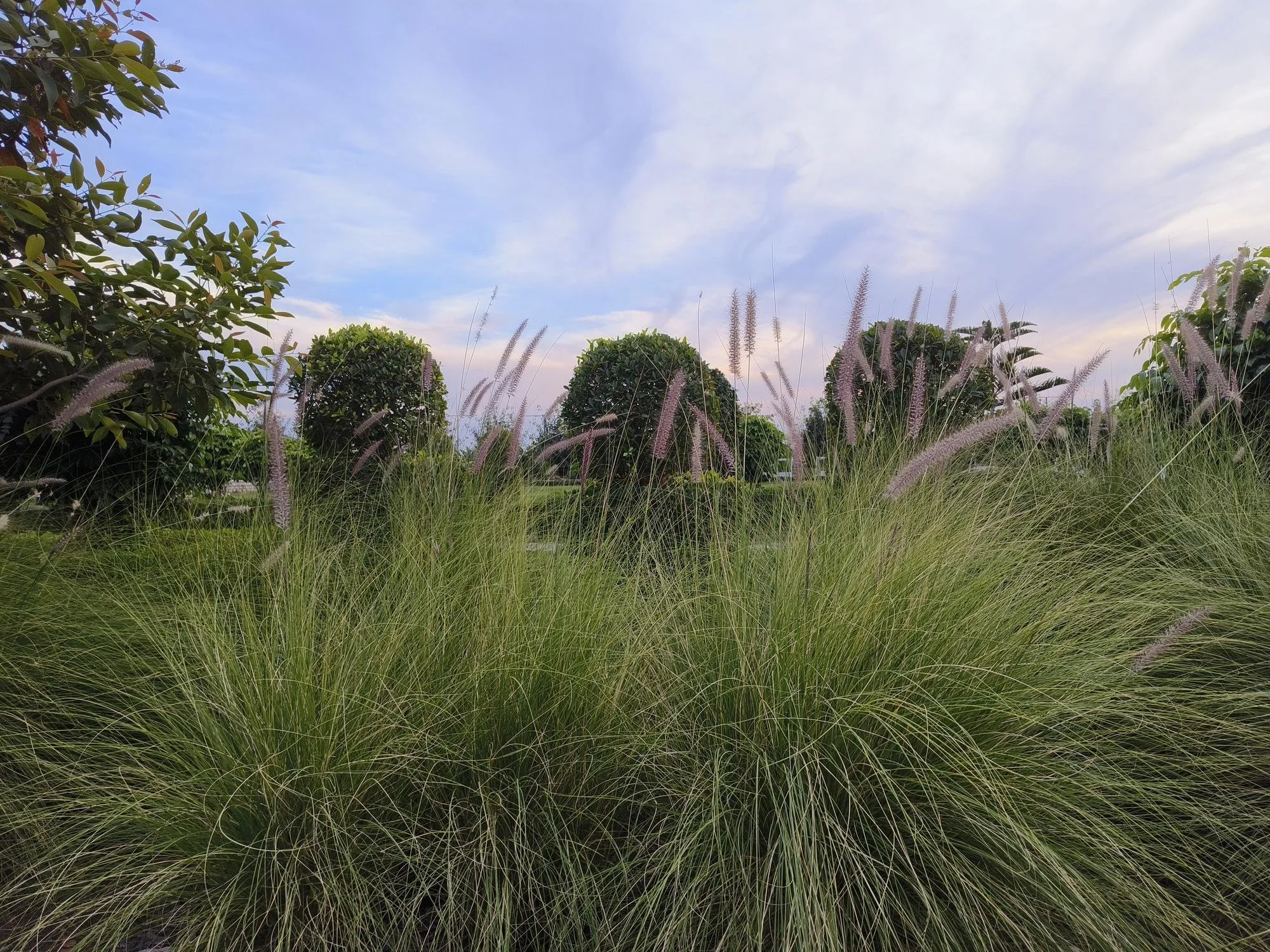
Deer Grass
Botanical Name Muhlenbergia rigens
Height 3 to 5 feet tall and wide
Blade Texture Broad and arching
Description: Deer grass is one of the most reliable structural grasses for Sonoma County landscapes. It forms a dense fountain shape with tall flowering stalks that rise above the foliage in late spring and summer.
Water Needs Low after establishment
Pruning Cut back to 6 to 8 inches in late winter before new growth begins.
Fire Safe Placement Because it forms a dense clump, it should not be planted directly against structures. Maintain spacing and remove dry material annually. Best uses Anchoring large planting beds, softening retaining walls, creating movement in the wind.
Purple Needlegrass
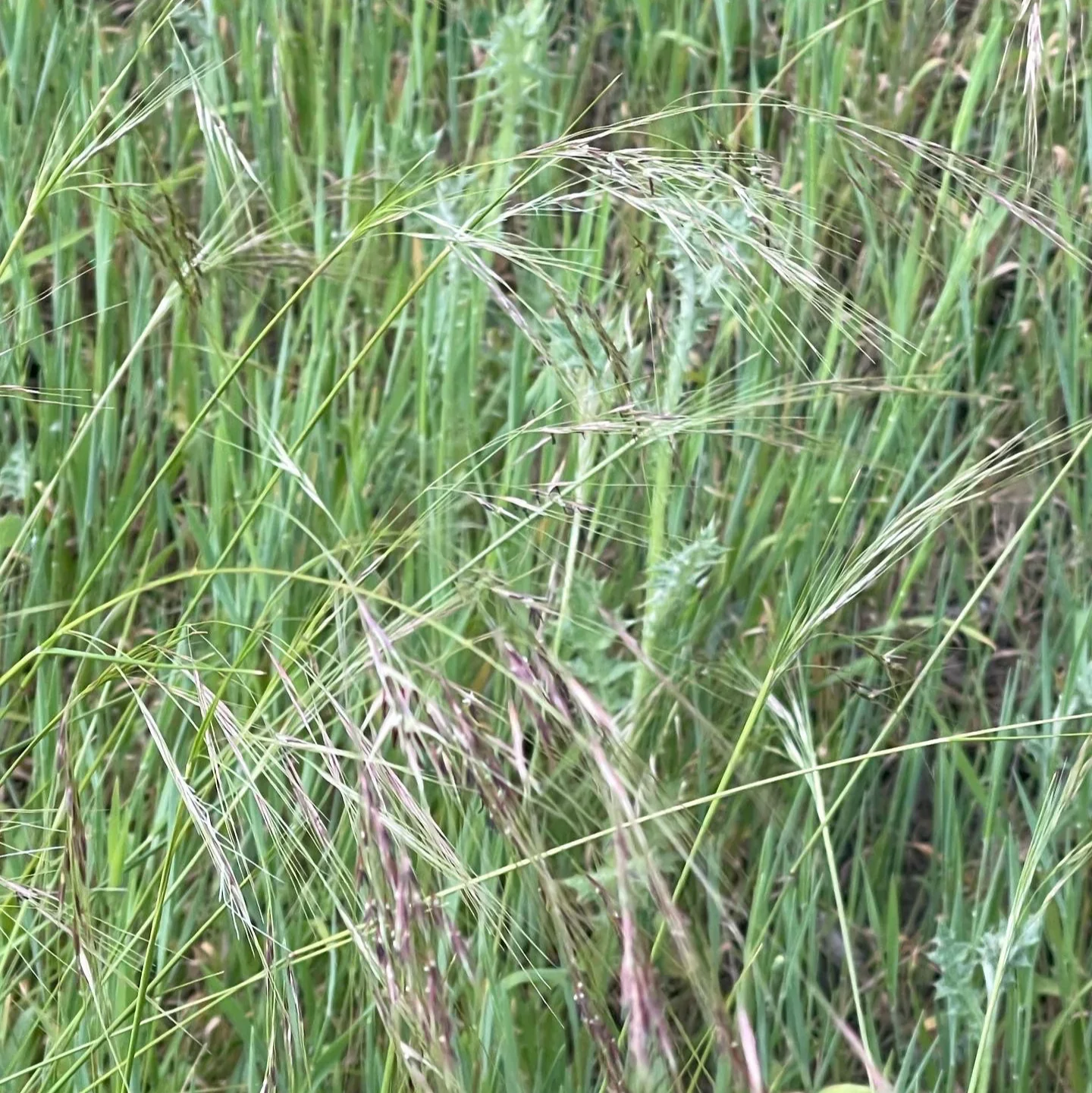
Botanical Name Stipa pulchra
Height 2 to 3 feet
Blade Texture Fine and airy
Description This is California’s state grass and one of the most elegant native options for naturalistic landscapes.
Water Needs Very low once established
Pruning Comb or lightly cut back in late winter if needed. Avoid heavy shearing.
Fire Safe Placement Placement Works well in defensible space when maintained and cleared of dry buildup.
Best uses Meadow style plantings and areas where subtle movement is desired. It looks exceptional in the wind during summer.
Blue Wildrye
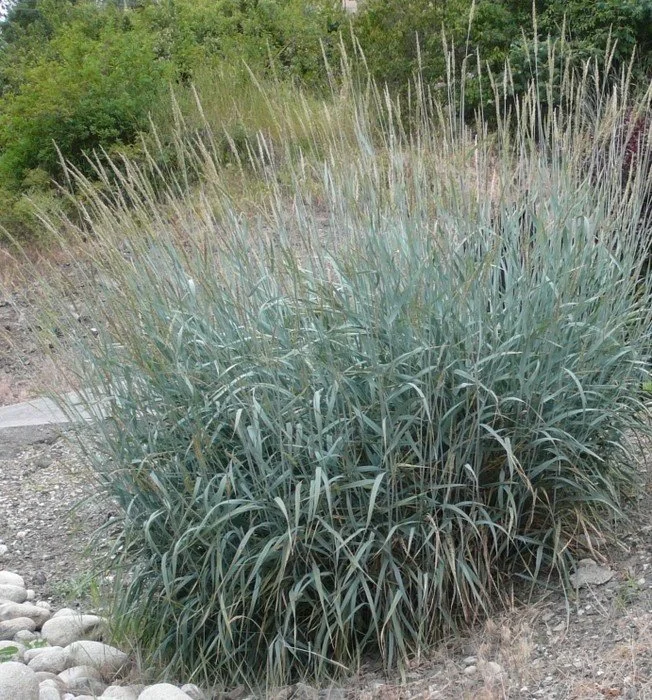
Botanical name Elymus glaucus
Height 2 to 4 feet
Blade texture Upright blades with blue green tones
Description Blue wildrye provides vertical structure and a cooler toned color palette.
Water needs Low once established
Pruning Cut back in late winter if foliage begins to look tired.
Fire Safe Placement Best uses Under light shade of oaks or in transitional areas between open garden and woodland.
California Fescue
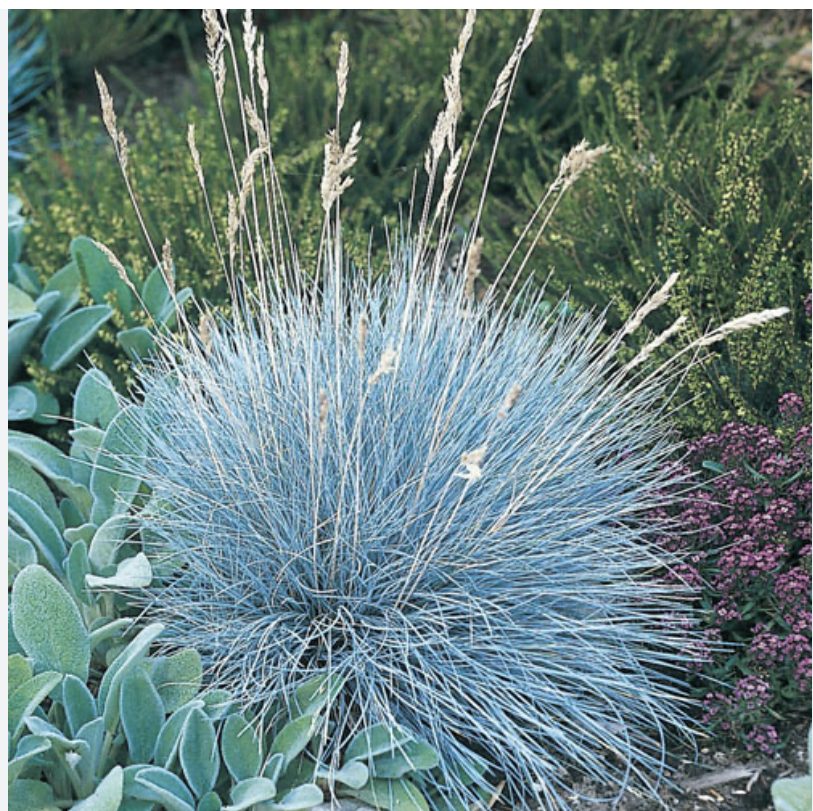
Botanical name Festuca californica
Height 1 to 2 feet
Blade Texture Fine and soft
Description This is a lower growing grass that works well in the foreground of planting beds.
Water Needs Low to moderate depending on exposure
Pruning Light combing or cutting back in late winter.
Fire Wise Placement Ideal closer to structures because it remains relatively compact when maintained.
Best uses Understory planting and mass planting for soft texture contrast.
Creeping Wildrye
Botanical Name Leymus triticoides
Height 1 to 2 feet
Blade Texture Narrow and upright
Description This grass spreads by rhizomes and performs well in soils that experience seasonal moisture.
Water needs Low to moderate
Pruning Cut back in late winter.
Best uses Near water features, bioswales, and rain gardens.
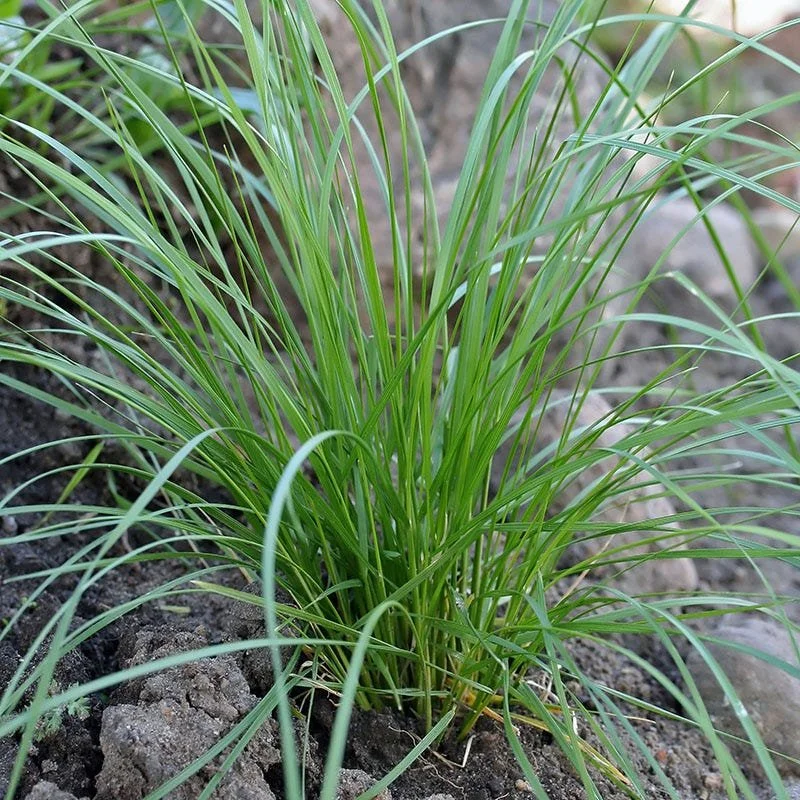
Tufted Hairgrass
Botanical name Deschampsia cespitosa
Height 2 to 3 feet
Blade texture Very fine and delicate
Description This grass thrives in cooler, partially shaded areas and tolerates more moisture than many native grasses.
Water needs Moderate compared to others on this list
Best uses Near water features, in shadier gardens, or softening stone pathways.
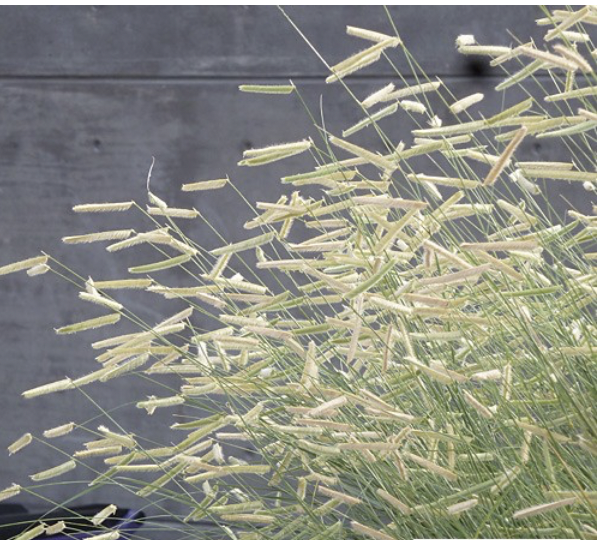
Eyelash Grass
Botanical Name Bouteloua gracilis
Height 1 to 2 feet
Blade Texture Fine with horizontal seed heads
Description Also known as Blue Grama, eyelash grass is valued for its distinctive seed heads that resemble eyelashes floating above the foliage.
Water needs Very low once established
Pruning Cut back lightly in late winter if needed.
Fire Wise Placement Excellent for defensible space due to its low growing habit and minimal thatch buildup.
Best uses Foreground planting, meadow style designs, and areas where wind movement is desired.
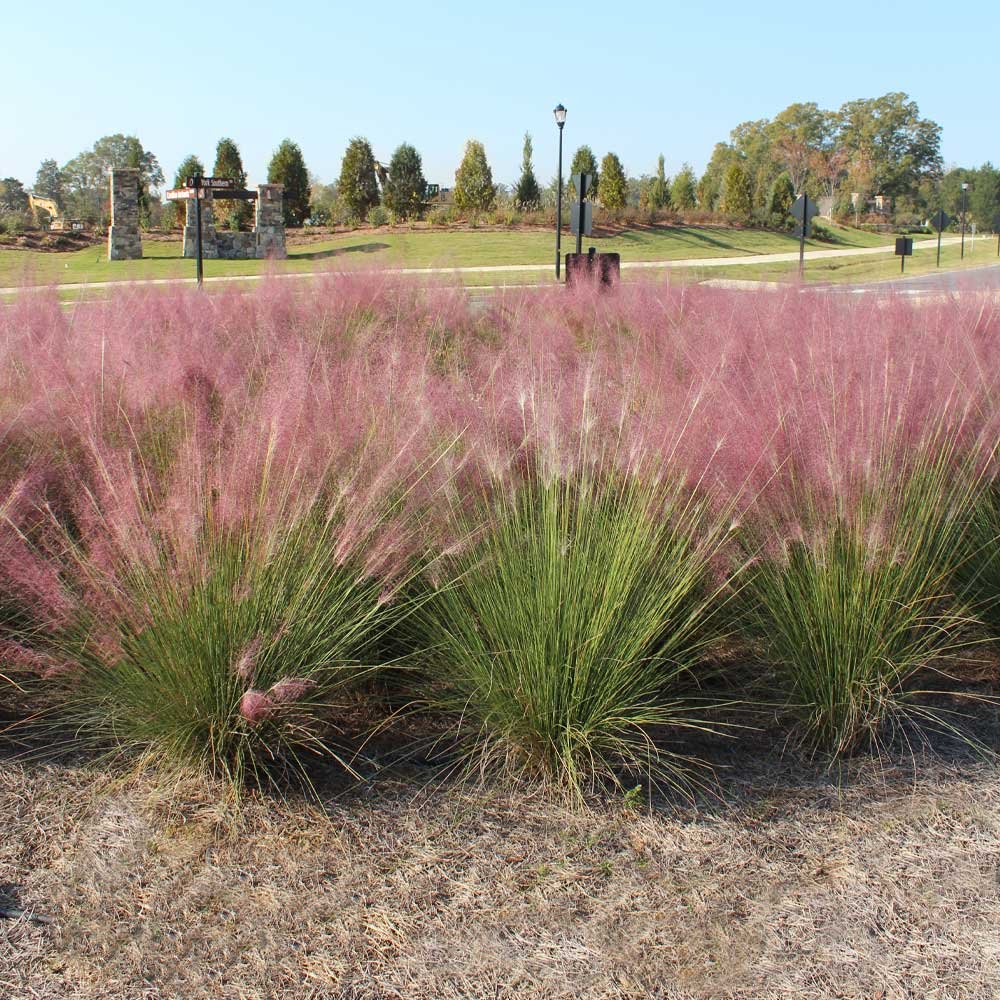
Pink Muhly Grass
Botanical Name Muhlenbergia capillaris
Height 2 to 4 feet
Blade Texture Fine with dramatic plumes
Description Pink muhly grass is not native to Sonoma County or California, but it performs well in our climate and is commonly used in high end landscapes for its dramatic fall color.
Water needs Low water
Pruning Cut back hard in late winter before spring growth begins.
Best uses Statement planting and areas where seasonal movement and texture are desired.
Carex Tumulicola
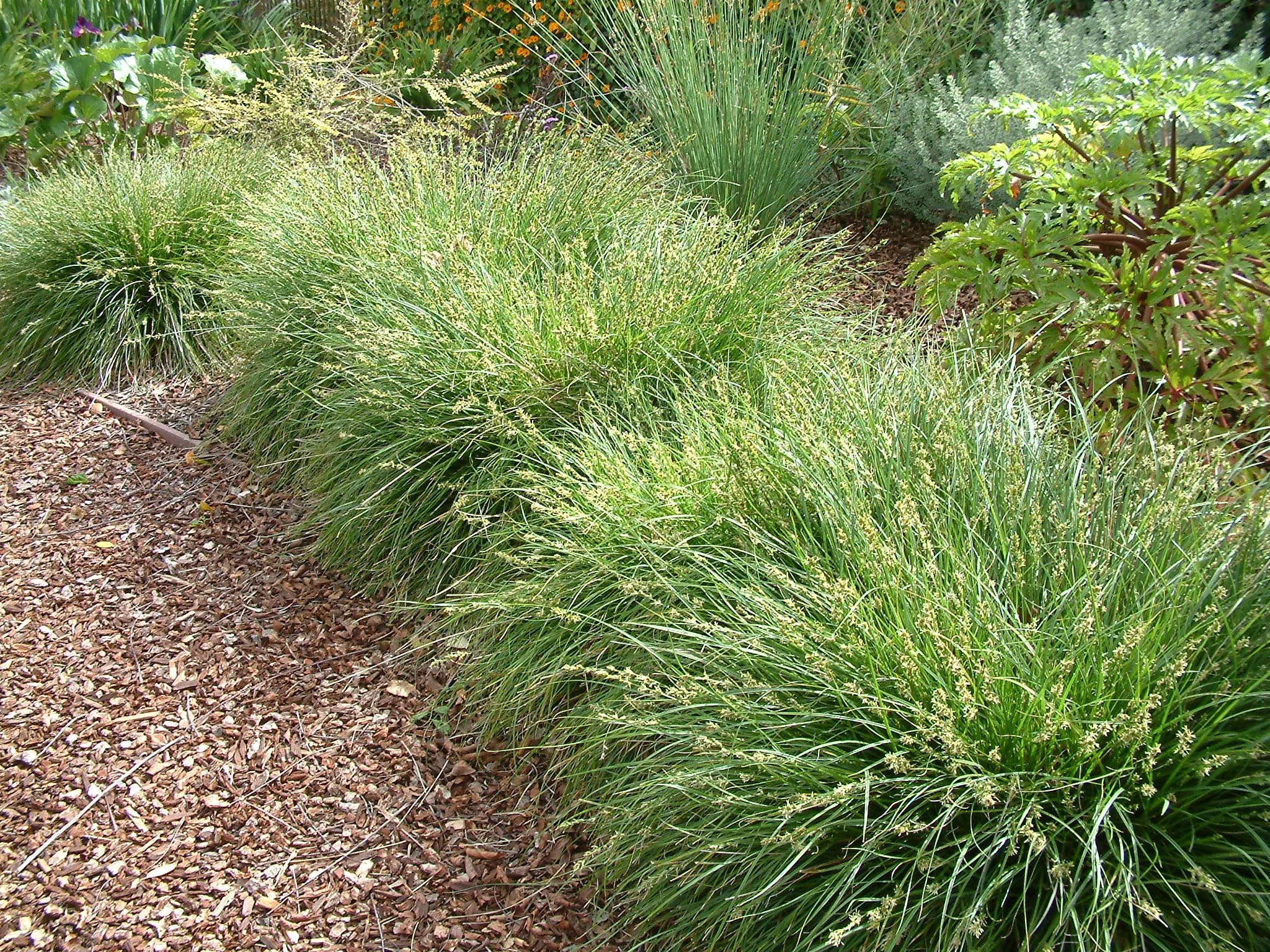
Description Commonly known as Berkeley sedge, Carex tumulicola is not technically a grass but behaves like one in the landscape and is widely used throughout Sonoma County as a drought tolerant lawn alternative.
Height 12 to 18 inches
Blade Texture Fine and arching
Water needs Low to moderate depending on sun exposure
Pruning Can be cut back in late winter to refresh growth. It responds well to occasional trimming if you are maintaining a more lawn like appearance.
Fire Wise Placement Excellent for defensible space because it stays low and does not build up large amounts of dry material when maintained.
Best uses
Foreground planting
Native lawn alternatives
Around pathways
Under oak trees
Designing With Texture and Height
Native grasses allow you to layer landscapes intentionally. Fine bladed grasses such as purple needlegrass and tufted hairgrass create softness and movement, while bold grasses such as deer grass create mass and architectural presence.
Low growers such as California fescue and eyelash grass can be used in the foreground, while taller species such as deer grass work well toward the back of a planting bed.
In Sonoma County, afternoon breezes make grasses that move in the wind an especially valuable design element.
Water Needs and Establishment
Even drought tolerant grasses require regular irrigation during their first growing season. After establishment, most native grasses on this list thrive with minimal summer irrigation.
Plant in fall whenever possible so winter rains can support root establishment naturally. Avoid planting during periods of extreme summer heat.
Fire Wise Considerations
Native grasses can absolutely be part of a fire wise landscape when properly maintained.
Keep grasses trimmed and remove dry buildup annually. Maintain spacing between plants and avoid dense planting directly against structures. Incorporate gravel or hardscape breaks where possible.
When managed correctly, native grasses can be significantly safer than neglected ornamental grasses that accumulate heavy thatch.